Neuroscience-Inspired AI (Νeuro AI)
An Evolving Reciprocal Synergy Advancing Science and Technology
July 15, 2026 · 15:00 – 16:30
Eugenides Foundation, Athens, Greece
Neuroscience and Artificial Intelligence are entering a new era of mutual inspiration. While advances in AI are transforming our ability to study and understand the brain, neuroscience continues to provide fundamental insights for building more efficient, adaptive, and trustworthy intelligent systems. This panel brings together researchers from artificial intelligence, neuroscience, medicine, and computational neuroscience to explore the emerging field of Neuro-AI as a truly reciprocal synergy between natural and artificial intelligence. Discussions will span topics ranging from continual learning, energy-efficient computation, robustness and biological plasticity, to ageing, creativity, and the fundamental nature of intelligence itself. As AI systems become increasingly capable, this conversation will examine not only what the brain can teach AI, but also what AI reveals about human cognition, creativity, and our place in the evolving landscape of intelligence.
Organizer: Maria Papadopouli
Panelists

Constantine Dovrolis
Director, Computation-based Science and Technology Research Center (CaSToRC), The Cyprus Institute & XM Chair in Artificial Intelligence (from Sept. 2026), University of Cyprus
Constantine Dovrolis is Director of the Computation-based Science and Technology Research Center (CaSToRC) at The Cyprus Institute, and will assume the XM Chair in Artificial Intelligence at the University of Cyprus in September 2026. He served on the faculty of the School of Computer Science at the Georgia Institute of Technology from 2002 to 2025 and is an ACM Distinguished Member. He holds degrees from the Technical University of Crete, the University of Rochester, and the University of Wisconsin–Madison. His research spans machine learning, network science, and data-driven modeling, with a strong recent emphasis on neuro-inspired artificial intelligence. His group has developed new methods in continual learning, memory consolidation, and modular neural architectures, with publications at leading venues including ICML, NeurIPS, CVPR, and TMLR. Dovrolis also works extensively across disciplines, collaborating with researchers in neuroscience, biology, medicine, and climate science. His publications have received more than 16,000 citations, and his research has been supported by NSF, NIH, DOE, DARPA, Horizon Europe, the Research and Innovation Foundation of Cyprus, and industry partners including Google, Microsoft, and Cisco.
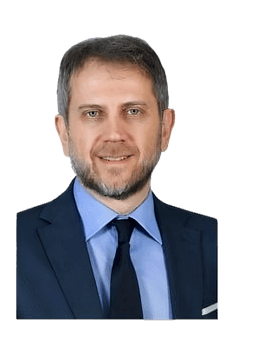
Leontios J. Hadjileontiadis
Professor of Electrical and Computer Engineering, Aristotle University of Thessaloniki (AUTH), Greece & Adjunct Professor, Khalifa University, UAE
Leontios J. Hadjileontiadis is Professor of Electrical and Computer Engineering at Aristotle University of Thessaloniki (AUTH), Greece, and Adjunct Professor of Biomedical Engineering and Biotechnology at Khalifa University, UAE. Holding Ph.D. degrees in Electrical and Computer Engineering and Music Composition, his interdisciplinary work bridges neuroscience, biomedical engineering, artificial intelligence, and music. His research focuses on advanced signal processing, biomedical signal processing, machine learning in healthcare, brain function analysis and assistive technologies for neurological and cognitive disorders. He has pioneered biomusic, transforming physiological and neural signals into musical expression to explore the relationships between brain dynamics, cognition, emotion, and creativity. He integrates scientific understanding of the human brain with innovative artistic creation. He has coordinated major international research projects exceeding €15 million and received several international awards for excellence in research, innovation, and education.
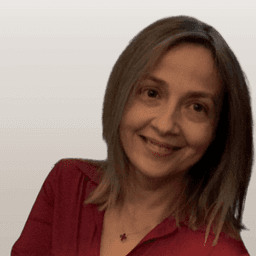
Maria Papadopouli
Professor of Computer Science, University of Crete & Research Associate, ICS-FORTH & Lead Researcher, Archimedes, Athena Research Center, Greece
Maria Papadopouli (Ph.D., Columbia University, 2002) is a Professor of Computer Science at the University of Crete, a Research Associate at the Institute of Computer Science, FORTH, a Lead Researcher at the Archimedes Research Unit, Athena Research Center, and a Fulbright Scholar. She has been a MSCA Fellow at the Brigham and Women's Hospital, Harvard Medical School (2022-2025), a Fulbright Scholar at the Computer Science and Artificial Intelligence Laboratory (CSAIL), MIT (2017) and at Harvard Medical School (2026-2027), and a visiting professor at the School of Electrical Engineering, KTH Royal Institute of Technology in Stockholm. From July 2002 until June 2006, she was a tenure-track Assistant Professor at the University of North Carolina at Chapel Hill (UNC), on leave from July 2004 until June 2006. She is interested in understanding the underlying dynamics of various complex real-world networks, from the Internet to the brain. Her research has been supported by several awards (e.g., IBM Faculty Awards, Google Faculty Award) and national, EU, and international grants. She is one of the co-founders of the Greeks in AI.

Alexandros Potamianos
Associate Professor, School of ECE, National Technical University of Athens, Greece & Visiting Professor, University of Southern California & Amazon Scholar
Alexandros Potamianos (Ph.D., Harvard University 1995) was a Senior Technical Staff Member with AT&T Shannon Labs (1995–1999), a Technical Staff Member and Technical Supervisor with Bell Labs, Lucent Technologies (1999–2002), an Associate Professor at the Department of ECE, Technical University of Crete (2003–2013), and since 2013 serves as an Associate Professor at the School of ECE, National Technical University of Athens, Greece. He is also a Visiting Professor at the Viterbi School of Engineering, University of Southern California, and an Amazon Scholar. He has authored or co-authored over 200 papers in professional journals and conferences, and holds five patents. His current research interests include foundation models, speech processing, dialog and multimodal systems, natural language understanding, machine learning and multimodal child-computer interaction. He has served multiple terms at the IEEE Speech and Language Technical Committee and Multimedia Technical Committee, and received a 2005 IEEE Signal Processing Society Best Paper Award. He is an IEEE fellow, an International Speech Communication Association (ISCA) fellow and a fellow of the Asia-Pacific Artificial Intelligence Association (AAIA).

Stelios Smirnakis
Associate Professor of Neurology, Harvard Medical School & Brigham and Women's Hospital
Stelios Smirnakis is an Associate Professor of Neurology at Harvard Medical School. A graduate of Harvard College, he received an MD and a PhD in Physics at Harvard and trained in Neurology, Vascular Neurology and Critical Care at Massachusetts General Hospital and Brigham and Women's Hospital before joining the faculty at Harvard Medical School in 2003. From 2001 to 2003 he was a Research Scientist at the Max Planck Institute for Biological Cybernetics, Tuebingen, Germany. His research focuses on systems neuroscience, and in particular on studying circuit mechanisms of visual perception and circuit mechanisms of malfunction in mouse models of neurological disorders like epilepsy and autism. His laboratory has a strong interest in studying the principles of biological network computations and how they can inform modern artificial intelligence approaches.
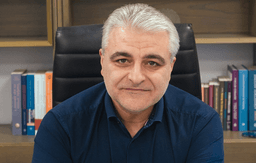
Nektarios Tavernarakis
Professor of Molecular Systems Biology, Medical School, University of Crete & Research Director, IMBB-FORTH & President, EMBC
Nektarios Tavernarakis is Professor of Molecular Systems Biology at the Medical School of the University of Crete, in Heraklion, Greece, and Distinguished Member of the Foundation for Research and Technology-Hellas (FORTH). He is also Research Director at the Institute of Molecular Biology and Biotechnology (IMBB) of FORTH, where he heads the Neurogenetics and Ageing laboratory, and currently serves as President of the European Molecular Biology Conference (EMBC). He has served as President of the Board of Directors of FORTH, President of the European Institute of Innovation and Technology (EIT) Governing Board, Vice President of the Scientific Council of the European Research Council (ERC), and Director of IMBB. He is a member of EMBO, the German National Academy of Sciences (Leopoldina), Academia Europaea, the European Academy of Sciences and Arts (EASA), the European Academy of Sciences (EurASc), and the Academy of Athens. His work focuses on the molecular mechanisms of ageing and neurodegeneration. He has received several notable scientific prizes, including two ERC Advanced Investigator Grants and an ERC Proof of Concept Grant, the EMBO Young Investigator award, the Friedrich Wilhelm Bessel research award of the Alexander von Humboldt Foundation, the Helmholtz International Fellow Award, and the Bodossaki Foundation Scientific Prize for Medicine and Biology, among many others.
Call for Student Research Papers & Awards
Best Student Papers in NeuroAI — awards, eligibility, topics, and submission details.